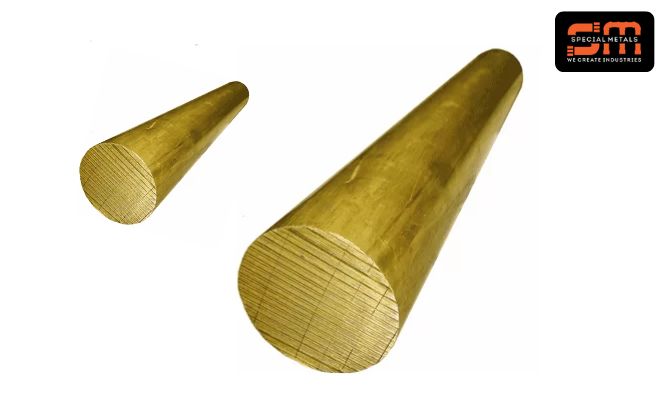
Industrial manufacturing relies on strong and corrosion-resistant non-ferrous metals. Brass stands among the most widely used materials in this group. Its balance of durability, workability, and cost efficiency supports various sectors, such as plumbing, electrical systems, machinery, and architecture. A brass rod is one of the most common brass forms used in machining and component manufacturing.
Industries value brass because it resists corrosion, machines easily, and maintains stable performance in different environments. These qualities explain the steady demand for brass components across commercial and industrial operations.
This blog explains the main properties of brass rods and why industries rely on them. It also lists the top ten industrial and commercial uses, along with key advantages and standards, followed by a reliable brass rod supplier and brass rod manufacturer.
What Is a Brass Rod?
Brass rods are solid bars made from a zinc and copper alloy. Copper increases the strength and corrosion resistance of brass, while zinc makes it harder and easier to machine. Brass rods are available in different shapes, such as round, hexagonal, and square. The most common type is the round brass rod, which is widely used in machining. Brass has good machinability due to its alloy structure, which allows cutting instruments to remove material with minimal resistance. This reduces tool wear and improves smoothness during manufacturing. Brass rods possess strong corrosion resistance and moderate electrical conductivity, which makes them suitable for use in electrical and plumbing systems. These features make brass rods appropriate for a wide range of industrial and commercial applications.
Key Properties of Brass Rods
Understanding the physical and chemical properties of brass helps in choosing the best material for a project. Below are the key properties that determine its performance.
- High Machinability: Brass machines easily compared with many metals. Cutting tools move smoothly through the material. This helps achieve accurate shapes and clean surfaces during turning, drilling, and milling.
- Corrosion Resistance: Brass is resistant to corrosion in air, water, and different industrial conditions. It enables it to withstand for a long period in plumbing, marine parts, and outdoor applications.
- Moderate Strength: Brass rods are strong enough for various mechanical applications. They perform efficiently in fittings, connectors, and machine parts that do not require excessive load capacity.
- Good Ductility: Brass bends and forms without cracking. This property allows shaping and forming operations during the manufacturing of components and fittings.
- Electrical and thermal conductivity: Brass conducts electricity and heat more effectively. This feature makes it suitable for applications where connections, terminals and electrical components are required.
- Attractive Golden Appearance: Brass consists of a natural golden colour. This visual appeal makes it suitable for decorative hardware, architectural fittings, and visible components.
Top 10 Brass Rod Uses
The versatility of brass allows it to serve various industrial and commercial functions.
- Electrical Components
Electrical systems often use brass rods to produce terminals, pins, and connectors. Brass provides reliable conductivity and corrosion resistance. Precision machining of a brass round rod allows the production of small electrical parts with tight tolerances.
- Plumbing Fittings
Brass rods are used in plumbing systems to create valves, taps, and pipe fittings. Brass resists corrosion from water exposure and retains its strength over time. This ensures the safety and durability of plumbing components in both residential and industrial structures.
- Fasteners and Hardware
Bolts, nuts, screws, and threaded components are often produced from a brass rod. The material allows accurate machining of threads and provides good resistance against rust and environmental damage.
- Automotive Components
Automotive systems use brass rods for bushings, radiator fittings, and small precision parts. Brass handles vibration and moderate heat while maintaining dimensional stability in vehicle components.
- Marine Applications
Marine environments expose materials to saltwater and moisture. Brass performs well in such conditions. Marine hardware and corrosion-resistant fittings are often manufactured from brass rods.
- Decorative and Architectural Uses
Brass rods are used in the manufacturing of railings, trims, door handles and other architectural fittings. The natural golden shine of brass gives visual appeal to both interior and exterior projects.
- Musical Instruments
Musical instruments such as trumpets, trombones, and saxophones use brass parts for sound quality and durability. Brass rods help form precise components during instrument manufacturing.
- Industrial Machine Parts
Many machine components are made from machined round brass rod stock. Brass is ideal for gears, shafts, and small mechanical components due to its smooth machining and consistent performance.
- Aerospace Components
Certain aeroplane components require lightweight, precise materials. Brass rods are used for producing small precision components that require corrosion resistance and dimensional accuracy.
- Ammunition Casings
Cartridge cases used in ammunition manufacturing often come from brass material. Brass offers the required strength, ductility, and reliability for repeated pressure cycles.
Advantages of Using Brass Rods
Industries prefer brass rods because they combine several practical benefits.
- Long Service Life: Brass components resist corrosion and wear. This helps parts operate reliably for long periods in industrial and commercial systems.
- Low Friction Properties: Brass produces low friction during movement. This supports use in bushings, gears, and moving machine parts.
- Spark Resistance: Brass does not easily produce sparks when struck. This property makes it suitable for equipment used in sensitive environments.
- Easy Machining Reduces Production Cost: Machining brass requires less cutting force. It reduces tool wear and production time throughout the manufacturing process.
- Recyclability and Sustainability: Brass can be recycled without losing important properties. Recycling reduces raw material demand and supports sustainable metal use.
Brass Rod vs Copper Rod
Brass and copper rods are both used in industrial applications, but each has its unique advantages.
- Strength Comparison: Brass rods are often stronger than pure copper rods. This makes brass a better choice for mechanical parts and fittings.
- Cost Difference: Brass usually costs less than copper because zinc replaces part of the copper content. This helps reduce production expenses.
- Conductivity Differences: Copper offers better electrical conductivity than brass. For high-conductivity applications, copper rods are the preferred option.
- Corrosion Resistance Comparison: Both metals are highly corrosion resistant. Brass performs better in marine conditions due to its alloy composition.
- Application Suitability: Copper rods are suitable for electrical conductors. Brass rods work better for machining, fittings, and mechanical components.
Standards and Specifications
A brass rod used in industrial manufacturing must meet stringent international standards to ensure quality and uniformity. ASTM B16 and ASTM B124 are the key specifications that define the chemical composition, mechanical properties, and manufacturing requirements. These features contribute to consistent performance throughout machining and service use. In India, many IS standards define the manufacture of brass rods for industrial use. Brass rods are offered in different diameters to accommodate various machining requirements. A common brass round rod can vary in size from small precision to larger diameters used in mechanical components. Manufacturers provide different tolerances and surface treatments depending on the application. These parameters help the industries to choose the most acceptable rod size and quality for their manufacturing requirements.
How to Choose the Right Brass Rod Supplier
Selecting the right brass rod supplier plays an important role in maintaining consistent product quality. Industrial consumers generally look for suppliers who offer a variety of brass grades, like C36000, as it is known for its high machinability. It is also important to know what sizes of rods are available in terms of diameter and length because different manufacturing processes need different diameters. Quality certification is another important factor. Reliable suppliers follow the precise international standards and provide test reports for material verification. Custom machining supports manufacturers who need exact dimensions or unique shapes. Partnering with a reputable brass rod manufacturer ensures a steady supply, high-quality material and accurate specifications. A reliable supplier improves production efficiency and helps to sustain long-term industrial operations.
Conclusion
Brass continues to be one of the most useful metals used in modern manufacturing. Brass rods are flexible and can be used in various industrial and commercial applications. Machinability enables the exact shape of complex parts, while corrosion resistance supports long-term operation in various environmental conditions. Brass rods are used in several applications, such as plumbing fittings, electrical connectors, mechanical components, and decorative hardware. Choosing the right material quality is also vital for ensuring product reliability. Working with an experienced brass rod supplier or brass rod manufacturer ensures consistent standards and a dependable supply. Premium brass rods help achieve precision, durability, and long-term performance in demanding industrial operations.