Modern engineering demands materials that combine low mass with environmental survival. There is a growing demand for lightweight and corrosion-resistant materials across infrastructure projects. Choosing the correct metal is the most important step in the chemical, marine and industrial sectors. If the material selection is wrong, salt or acids destroy the components. Titanium Gr 1 Wire is a primary solution as a Commercially Pure Titanium Wire. This grade offers the highest ductility among unalloyed options. Grade 1 is commonly used for high corrosion resistance applications where metal must bend without breaking. This blog explains the benefits and industrial uses of this specific wire.
What Is Titanium Gr 1 Wire?
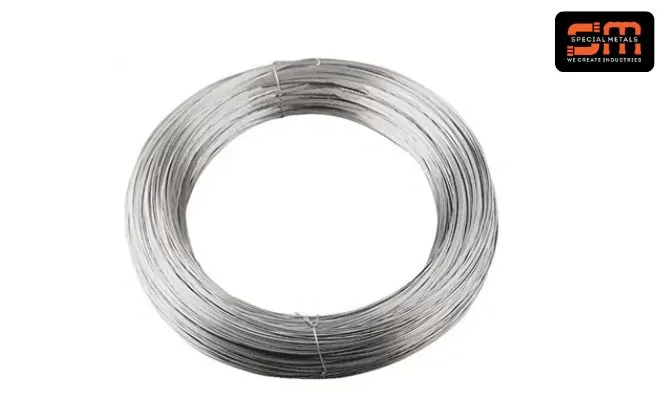
Titanium Gr 1 Wire is the softest form of Commercially Pure Titanium Wire. This metal has the lowest oxygen content of all unalloyed grades. This low oxygen level ensures the material stays easy to work with during manufacturing. It is resistant to corrosion and stays stable in harsh fluids. The metal quickly forms a protective oxide layer because it doesn’t have heavy alloying elements.
The difference between Grade 1 and stronger titanium alloys is the balance between strength and flexibility. Grade 5 is much stronger, but it is brittle. Grade 1 offers superior formability and weldability. One can shape this wire into complicated shapes without it breaking. It stays strong even after being welded,, making it a great fit for marine and chemical hardware.
Chemical Composition and Key Properties
The performance of Titanium Gr 1 Wire depends on high purity levels. The titanium content is around 99% to ensure the metal’s ductility. This Commercially Pure Titanium Wire contains very low amounts of carbon, nitrogen, hydrogen and oxygen. Keeping these elements low prevents the metal from becoming brittle. High oxygen levels make the patterns worse for fabricators who need to bend the wire into tight shapes. We rely on this specific chemistry to provide outstanding resistance to seawater and aggressive chemical exposure.
This wire offers moderate strength along with high ductility. Its ability to stretch without snapping is the metal’s greatest asset. The best thing about this metal is that it can stretch without breaking. It has great thermal and electrical conductivity for certain industrial jobs. It is used near sensitive electronics because it doesn’t attract magnets, and it also keeps the wire stable when it gets hot.
Mechanical Properties of Titanium Grade 1 Wire
Titanium Gr 1 Wire offers a tensile strength between 240 and 350 MPa. It does not have a single statement for strength because it focuses on being soft. The yield strength is low, usually around 170 to 310 MPa. This low resistance to the start of permanent deformation makes the metal perfect for complex shapes.
Its elongation properties often exceed 24%. This high stretching ability allows for extreme forming and bending operations without the wire snapping. Hardness remains low on the Vickers scale. This keeps the material from wearing down the tools used during production. Along with being easy to cut, the wire handles cold working better than any other titanium grade.
Key Benefits of Using Titanium Gr 1 Wire
Titanium Gr 1 Wire remains unmatched in environments where standard metals fail. This Commercially Pure Titanium Wire offers a unique mix of chemical stability and extreme flexibility for complex industrial projects.
- Exceptional corrosion resistance in aggressive environments: A natural oxide layer forms on the wire surface. This shield protects the metal from chlorides and acids.
- Lightweight compared to stainless steel: This wire reduces the total mass of industrial assemblies. Titanium is about 45% lighter than steel, which improves efficiency in marine and aerospace structures.
- High ductility for complex fabrication: This grade is the softest titanium available. It allows for bending and shaping into intricate designs without cracking.
- Excellent weldability: Grade 1 is easy to weld because it is pure. The joints stay strong and maintain the same corrosion resistance as the rest of the wire.
- Long service life; Components last for decades because the material does not degrade. Making it a durable option.
- Low maintenance cost: Less money is spent on repairs. Because it resists rust, there is no need for protective coatings or frequent replacements.
- Biocompatibility advantages: The human body does not reject this metal. It is safe for medical implants and surgical tools, in addition to its industrial uses.
Industrial Applications of Titanium Grade 1 Wire
Titanium Gr 1 Wire performs well in extreme settings. It provides the necessary chemical stability and mechanical flexibility required for the chemical, marine and medical sectors. Its use in these industries ensures that components withstand high pressure and corrosive fluids.
Chemical Processing Industry
- Heat exchangers: Excellent thermal conductivity makes this wire ideal for transferring heat in corrosive fluids. The metal does not degrade when exposed to constant temperature shifts.
- Acid handling equipment: Superior resistance to nitric and chromic acids ensures that the hardware remains intact. It prevents leaks in high-risk chemical environments.
Marine Applications
- Seawater components: The wire withstands high-salinity water without pitting. It is the standard for underwater sensors and cooling systems.
- Fasteners and springs: High ductility allows for the creation of intricate springs that maintain tension even when wet.
Aerospace Industry
- Lightweight fastening components: Weight reduction is critical for flight efficiency. Replacing steel fasteners with titanium alternatives reduces the overall mass of the aircraft frame.
Medical Applications
- Surgical devices: Purity ensures that the metal is not toxic and can be used for surgical tools that require sterilisation.
- Implants and orthodontic uses: The human body accepts this metal easily. It serves as a reliable material for bone staples and dental braces.
Power Generation
- Condenser tubing supports: The wire provides structural integrity within power plant condensers. It resists the vibrations and steam erosion.
Titanium Gr 1 vs Grade 2 Wire
Titanium Gr 1 vs Grade 2 Wire are both titanium wire difined by their chemical difference, which dictates their industrial role.
| Feature | Titanium Grade 1 | Titanium Grade 2 |
| Tensile Strength | Lower (min. 240 MPa) | Higher (min. 345 MPa) |
| Yield Strength | 170 – 310 MPa | 275 – 450 MPa |
| Ductility (Elongation) | Highest (min. 24%) | Moderate (min. 20%) |
| Oxygen Content | Lowest (max. 0.18%) | Higher (max. 0.25%) |
| Best For | Deep drawing & intricate cold forming | Structural parts & pressure vessels |
Standards and Specifications
Adherence to global benchmarks ensures the reliability of Titanium Gr 1 Wire. The primary standard, ASTM B863, dictates chemical and mechanical requirements, while ASTM B348 governs related bar forms. For high-performance aerospace tasks, AMS standards like AMS 4951 provide strict fatigue and purity criteria.
The most common sizes are between 0.1mm and 10mm, which work for a lot of different industrial needs. You can choose from acid-pickled, polished or black oxide for the finish on the surface. These choices depend on whether the application needs the best adhesion, the best looks or less friction on the surface during fabrication.
How to Choose the Right Titanium Grade 1 Wire Supplier
Selecting a reliable Titanium Grade 1 Wire manufacturer requires verifying strict quality benchmarks.
Suppliers must provide Mill Test Reports (MTRs) and ISO certifications to confirm chemical purity and mechanical limits. Robust quality inspection processes, including ultrasonic or eddy current testing, ensure the wire is free from internal defects.
The correct diameter and surface finish plays and important role in precise work. Export experience ensures international shipping rules are followed and delivery is on time. A trustworthy Titanium Grade 1 Wire manufacturer makes sure that shipping rules and delivery needs are met.
Conclusion
Titanium Grade 1 Wire is great for applications demanding maximum corrosion resistance and high ductility. Its unique ability to withstand chlorides and aggressive acids while remaining easily formable makes it indispensable for the chemical processing and marine industries. Material integrity relies heavily on adhering to strict international standards like ASTM B863. Therefore, prioritising certified sourcing and verified mill test reports is essential for ensuring operational safety.
Smalloys provides premium Titanium Gr 1 Wire that ensures durability, reliability and long-term industrial performance in challenging environments.